
Topline
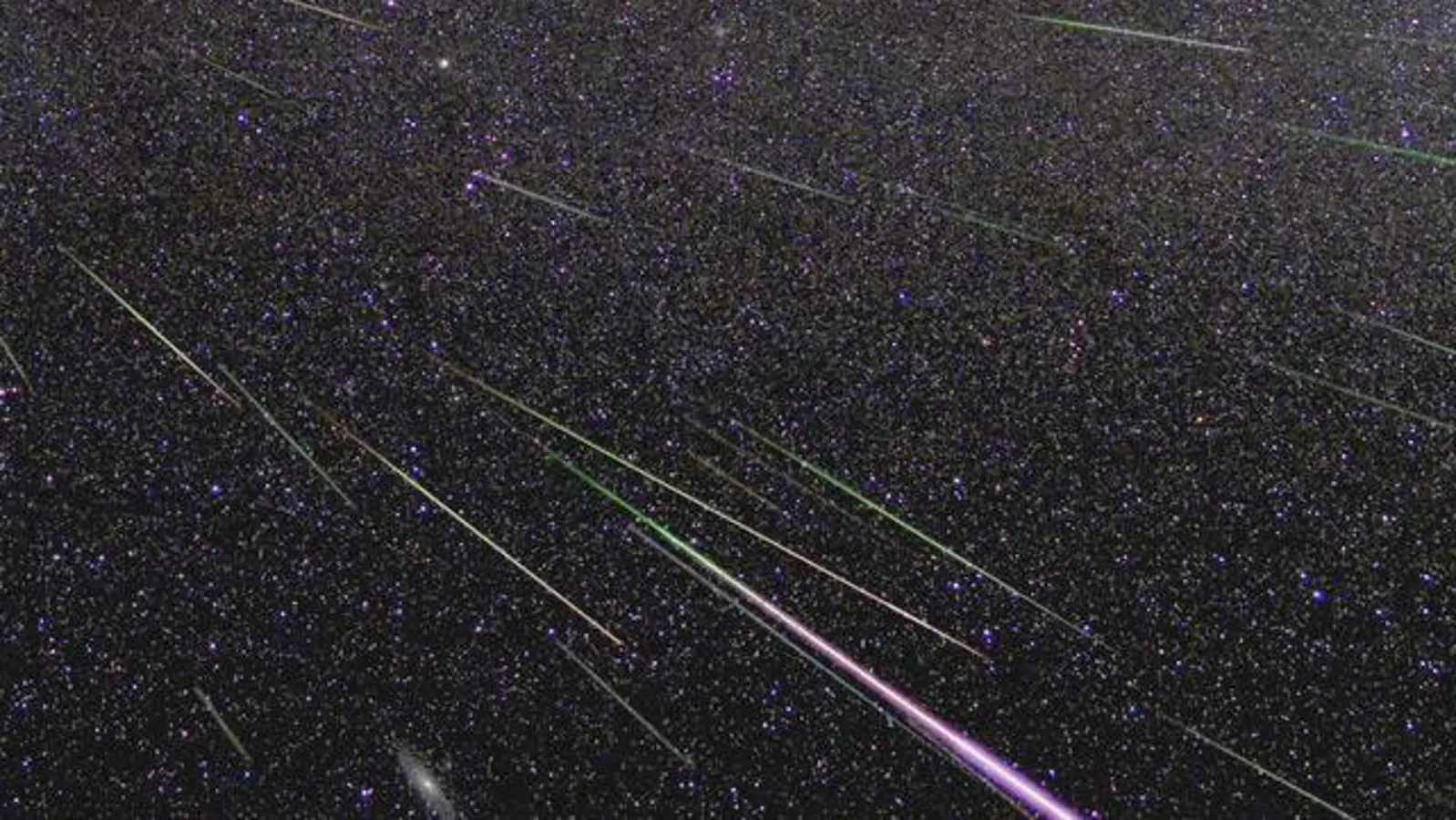
One of the rarest combinations of celestial events in years is now less than three weeks away. On Aug. 12, skywatchers in parts of Europe will witness a total solar eclipse, while millions more across Europe and North America will see a partial eclipse. Then, after sunset, attention will turn to the night’s second act as the Perseid meteor shower reaches its peak beneath perfectly dark, moonless skies. It could mean up to 100 “shooting stars” per hour in dark skies.
Read more Trump Threatens EU With Tariffs In Retaliation For Fines Against American Tech Giants
A Rare Double Feature In The Sky
Solar eclipses and major meteor showers are memorable events on their own, but experiencing both on the same day is exceptionally unusual. The eclipse will unfold during daylight hours across parts of the Northern Hemisphere before the new moon leaves behind the darkest skies possible for the Perseid peak later that night. Since moonlight is usually the biggest obstacle to seeing faint meteors, the timing could hardly be better. For observers fortunate enough to experience even a partial eclipse during the day, the evening offers an entirely different spectacle as Earth plows through one of the densest parts of Comet Swift-Tuttle’s debris stream.
Why The Perseids Are So Popular
The Perseids have long been considered the Northern Hemisphere’s most popular meteor shower despite December’s Geminids being more prolific. Active during warm summer nights, they regularly produce bright, fast meteors along with occasional fireballs that can briefly outshine the brightest stars and leave glowing trails lingering across the sky. Although meteor activity gradually increases throughout late July and early August, the peak occurs when Earth passes through the densest concentration of debris left behind by Swift-Tuttle during its 133-year orbit around the sun.
Where The Eclipse And Meteor Shower Overlap
The total solar eclipse will sweep across eastern Greenland, western Iceland and northern Spain, but many more people will experience a partial eclipse. In North America, the deepest eclipse will occur across eastern Canada, with smaller partial eclipses visible across parts of the northeastern U.S.
The eclipse will be visible from 26 U.S. states on Wednesday, Aug. 12. Alaska will have the deepest U.S. eclipse, with about 37% of the sun covered in Fairbanks at 8:27 a.m. AKDT. Maine will see the biggest eclipse in the contiguous U.S., reaching about 28% partial eclipse at around 1:50 p.m. EDT, while Boston will see 16% and New York 10%. Eclipse glasses will be required throughout.
Once darkness falls, virtually everyone across North America and Europe with clear skies can enjoy the Perseids. Unlike the eclipse, the meteor shower does not require being inside a narrow path — being on the night-side of Earth is all you need.
Read more Paramount Delays Warner Bros. Discovery Merger: Why The Decision Could Cost It Big Time
How To Watch The Solar Eclipse And The Perseids
Anyone hoping to enjoy astronomy’s biggest day of 2026 should begin by observing the eclipse with certified solar viewing glasses or properly filtered telescopes and cameras. Looking directly at the partially eclipsed sun without approved eye protection is never safe.
After sunset, head for a location away from city lights with a wide, unobstructed view of the sky. A Dark Sky Places or somewhere that looks dark on a light pollution map is recommended. Allow your eyes 20 to 30 minutes to adapt to the darkness, avoid checking bright smartphone screens and don’t use binoculars or telescopes, which will only restrict your view of the night sky. Meteor showers are best enjoyed with the naked eye because shooting stars can appear anywhere overhead.
Although the meteors appear to radiate from the constellation Perseus, the longest and brightest streaks are often seen well away from the radiant. The most productive viewing generally comes after midnight, when Earth’s rotation turns observers into the incoming stream of comet debris.
What Else To Look For In The Night Sky
Aug. 12 also happens to see Venus become half-lit as it moves closer to Earth — a beautiful sight in a small telescope. However, the real attraction in mid-August is the Milky Way, which is visible in the south after dark from across the world. For those at northern latitudes, the northern lights season typically begins in mid-August. Finally, keep an eye out for T Coronae Borealis (T CrB), nicknamed the “Blaze Star,” which is due to go nova during 2026 — and whose host constellation Corona Borealis is perfectly positioned in August 2026. The crescent-shaped constellation can be found between bright stars Vega and Arcturus.
Read more First Lawsuit Filed Against Trump’s New Tariffs—Why Legal Experts Are Skeptical It’ll Succeed
Further Reading
ForbesThe Perseid Meteor Shower Begins Today: When To WatchBy Jamie CarterForbes50 Days To A Total Solar Eclipse — Where And When To Experience ItBy Jamie CarterForbesNASA Drops Map Of Next Total Solar Eclipse — And It Visits The U.S.By Jamie CarterForbesWhy Americans Cannot Ignore August’s Total Solar EclipseBy Jamie CarterForbesThe ‘Blaze Star’ Could Explode Tonight — Here’s Where To LookBy Jamie CarterForbes1,000 Days Until ‘God Of Chaos’ Asteroid Stuns SkywatchersBy Jamie Carter