
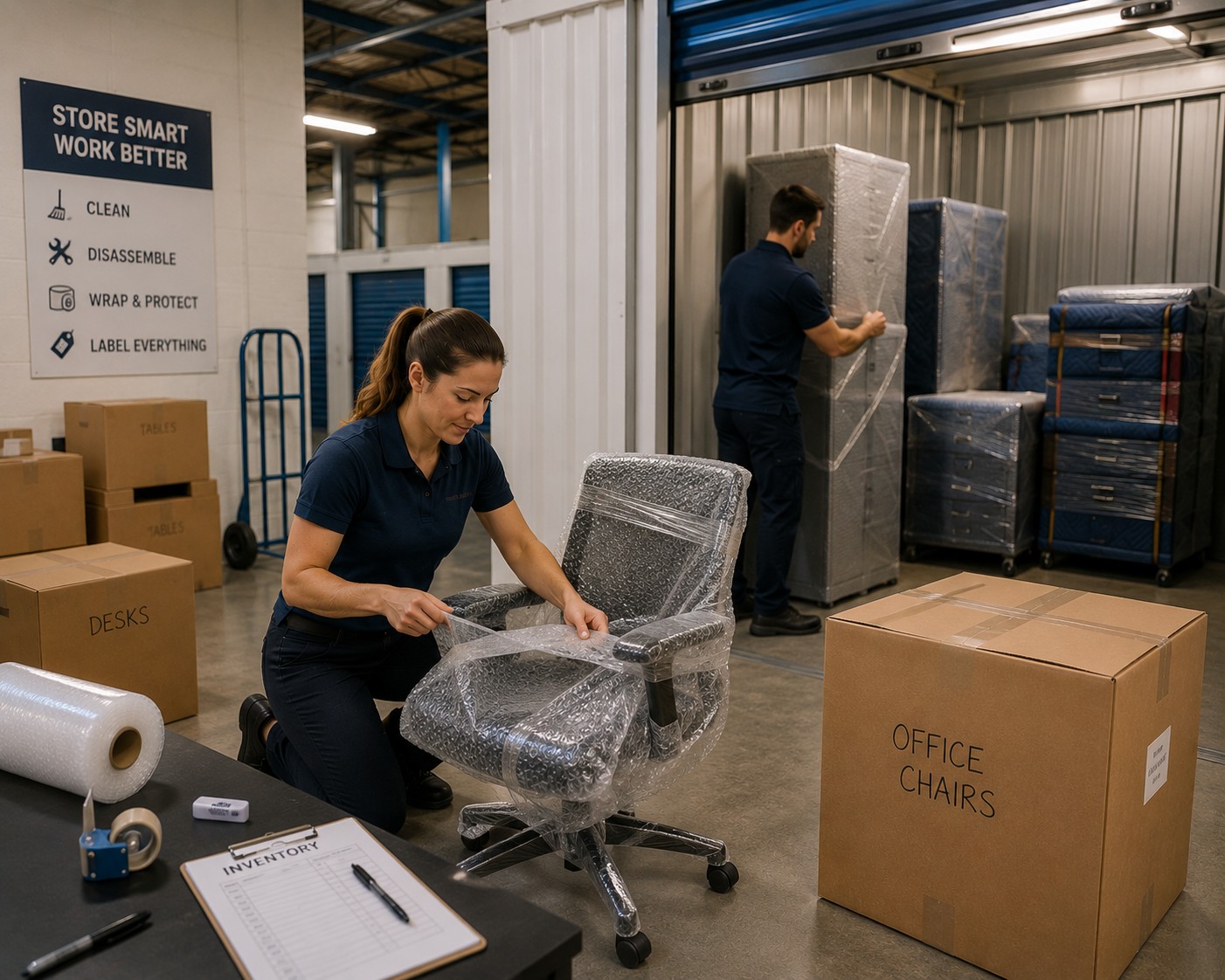
A commercial lease can end before the next office is ready. Renovations may run behind schedule, a company may be negotiating a new location, or a business might simply need several weeks between leases. Whatever the reason, large desks, conference tables, chairs, cabinets, and shelving still need somewhere to go.
Instead of rushing to sell useful furniture or crowding it into an unsuitable space, companies can use the gap between leases as a temporary storage period. With the right preparation, office furniture can remain protected and organized until the next workplace is ready.
Decide Which Furniture Is Worth Keeping
Storage costs and available space make it worthwhile to evaluate furniture before moving it.
Walk through the office and separate items into three groups: furniture going to the new location, pieces that may be replaced, and items that are no longer useful.
Consider the Next Workplace
The new office may have a completely different layout. Measure rooms, doorways, elevators, and designated work areas when possible.
A large conference table that worked perfectly in the previous office may not fit comfortably into the new meeting room. Likewise, extra desks might be useful if the company expects to expand.
Making these decisions before storage prevents businesses from paying to store furniture they ultimately will not use.
Prepare Furniture Before It Enters Storage
Office furniture should not simply be carried out of the building and placed into storage without preparation.
Clear desks and cabinets completely. Remove loose shelves, drawers, detachable legs, and other components where appropriate. Keep hardware in labeled bags and associate each bag with the correct furniture item.
Protect finished surfaces against scratches and friction. Desks with polished tops, glass components, or delicate finishes may require additional padding.
Nevada Movers provides moving and storage support for businesses in the Las Vegas area, helping companies manage the physical side of transitions between commercial locations.
Create a Furniture Inventory
A storage inventory makes the lease gap much easier to manage. Assign a simple identification code to each major item or furniture group.
For example, a company could record:
- D-01 — Executive desk
- CH-12 — Conference chairs
- TB-03 — Meeting table
- CAB-07 — Filing cabinet
Include photographs when useful, especially for furniture that will eventually be reassembled.
An inventory also helps management determine whether everything stored has actually returned to the new office when the transition ends.
Think About How Furniture Will Be Retrieved
Temporary storage should be organized around the next move, not just the current one.
Furniture that will be needed immediately at the new office should be easier to identify and retrieve. Items intended for later installation can be grouped separately.
Keep Components Together
Do not store table legs in one area and the corresponding hardware in another. Small parts can disappear surprisingly easily during a multi-stage relocation.
Group components with their furniture and label them clearly. For complicated desks or modular workstations, photographs can show how pieces fit together.
Protect Furniture During the Waiting Period

Even sturdy commercial furniture can suffer from poor handling or unsuitable storage conditions. Cover appropriate pieces to reduce exposure to dust and accidental contact.
Do not stack heavy objects on furniture surfaces unless the storage arrangement is specifically designed for it. Glass, laminate, and finished wood can be damaged by excessive pressure.
Office chairs should also be positioned so their arms, wheels, and bases are not crushed or tangled with other items.
Use the Storage Period to Plan the New Office
A lease gap can provide valuable planning time. Instead of unloading furniture immediately and deciding where everything belongs afterward, use the waiting period to finalize the new office layout.
Consider employee workstations, meeting areas, reception space, storage requirements, and circulation paths. Knowing where major furniture belongs makes the eventual delivery more efficient.
Business storage can therefore function as more than a temporary holding solution. It can create a controlled transition between two commercial environments.
Coordinate the Move With the Lease Dates
Timing matters when a company has limited access to its old property. Schedule furniture removal early enough to avoid a rushed final day, particularly if elevators, loading docks, or building access require reservations.
At the other end, confirm when the new property will actually be ready to receive furniture.
Nevada Movers can assist with the physical transportation involved in this process, while the company coordinates lease dates, access permissions, and installation schedules.
More information about business storage services is available at https://nevadamoverslv.com/services/business-storage/.
Keep the Transition Flexible
Not every commercial relocation follows the original timetable. Construction can be delayed, lease negotiations can change, or additional office space may become available unexpectedly.
A well-organized furniture inventory gives the company flexibility when circumstances shift. Instead of losing track of assets during an uncertain period, management can quickly identify what is available, what remains stored, and what needs to move next.
For Las Vegas businesses between commercial leases, thoughtful preparation can turn an awkward gap into a manageable staging period. By evaluating furniture early, protecting every piece, documenting the inventory, and coordinating storage with the future office layout, companies can preserve useful assets without allowing the transition to disrupt normal planning.